


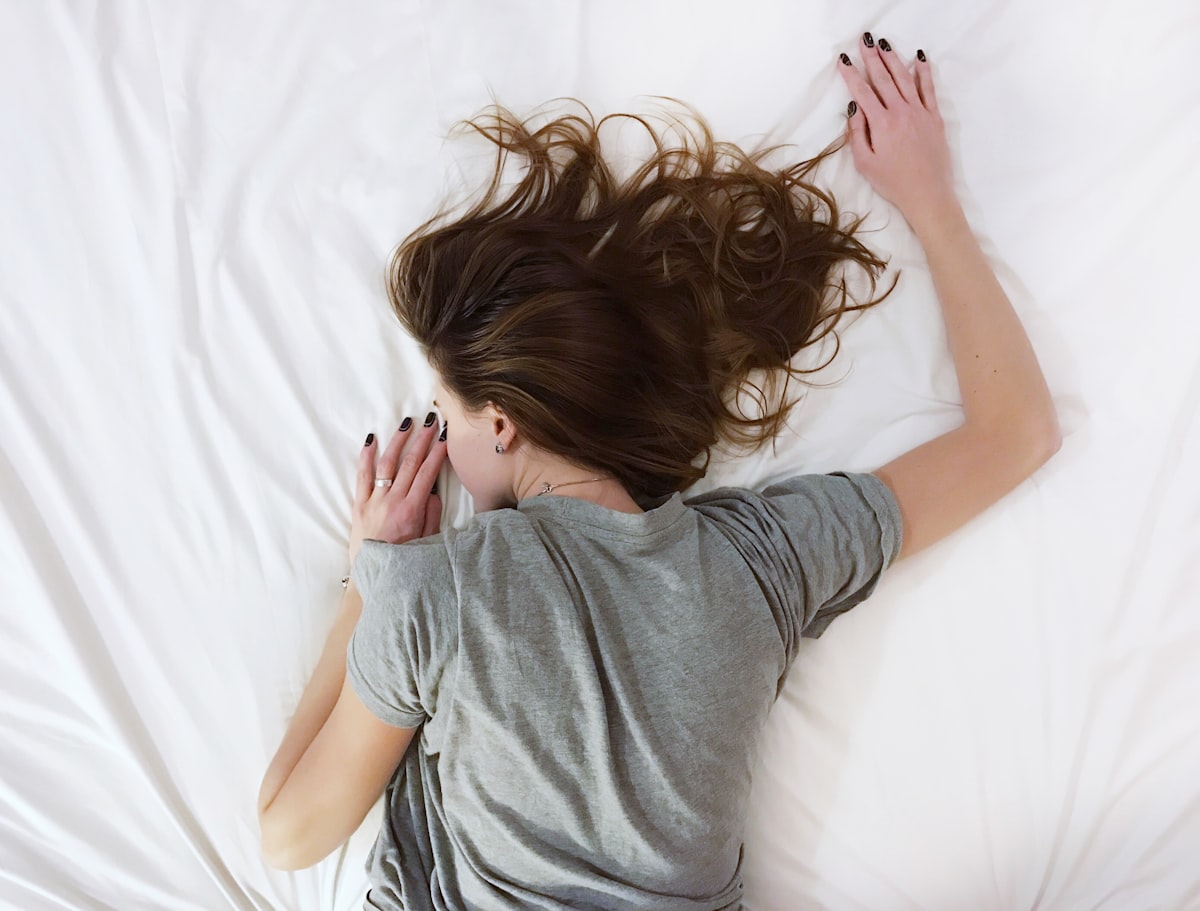
You fall asleep fine. The room feels comfortable, the pillows are right, everything's perfect. Then somewhere around 2–4am, you wake up. Hot. Sweaty. Tangled in damp sheets. You kick the covers off, flip the pillow to the cool side, and spend 30 minutes trying to get back to sleep. If this sounds like your nightly routine, you're not alone — and it's not your imagination. It's thermoregulation, and your bedding is almost certainly making it worse.
Your Body's Temperature Blueprint
Your body doesn't maintain a flat 98.6°F all day. It follows a circadian temperature rhythm — a predictable rise and fall that's tightly linked to your sleep-wake cycle.
In the evening, your core temperature begins to drop. This decline triggers melatonin production and signals to your brain that it's time to sleep. The drop continues through the night, reaching its lowest point — about 1–2°F below your daytime average — between 3am and 5am. After that nadir, your temperature gradually climbs back up, helping you wake naturally around dawn.
This cycle is essential. Research from the Division of Sleep Medicine at Harvard Medical School confirms that the temperature drop is what allows you to enter and sustain deep (slow-wave) sleep and REM sleep. If anything disrupts that cooling process, you get pulled out of deep sleep — often without knowing why.
Why Your Sheets Are the Problem
Your body's primary cooling mechanism during sleep is vasodilation — widening blood vessels near the skin surface to radiate heat outward. Your hands, feet, and torso all release heat throughout the night. This only works if that heat can actually escape into the surrounding environment.
Enter your sheets. The fabric between your skin and the air determines whether that heat dissipates or gets trapped. And most common sheet fabrics are terrible at this job.
Polyester & Microfiber
Synthetic fibers have essentially zero moisture absorption. When you sweat, the moisture sits on the surface of the fabric — and on your skin. It can't evaporate efficiently, so your body keeps sweating more to try to cool down. It's a vicious cycle that ends with you waking up in a pool. Microfiber feels soft in the store, but it's essentially a plastic-based heat trap.
Flannel
Flannel is cotton that's been brushed to create a fuzzy, insulating surface. It's perfect for cold climates — and absolutely brutal in anything above 65°F. The napped surface traps a thick layer of warm air against your body, turning your bed into a cocoon. Great in January in Minnesota. Miserable from April to October everywhere else.
High Thread Count Cotton
This is the counterintuitive one. Premium cotton sheets with very high thread counts (800+) can actually sleep hotter than budget sheets. The tightly packed threads reduce the space between fibers, limiting airflow. You're essentially sleeping under a very smooth, very expensive tarp. The trade-off between "silky feel" and "breathability" catches a lot of people off guard.
Satin/Silk
Silk is naturally temperature-regulating and breathable — it's actually not bad for hot sleepers. The problem is durability and cost. Real silk sheets are fragile, expensive, and high-maintenance. Most "satin" sheets are polyester satin, which has all the heat-trapping problems of any other synthetic.
The Fabric That Actually Works
Bamboo-cotton blends have emerged as the best option for temperature regulation, and the science backs it up.
Bamboo fiber has a unique cross-section filled with micro-gaps and micro-holes. These aren't a manufacturing defect — they're an inherent property of the cellulose structure. These gaps serve two functions:
1. Moisture wicking: Instead of sitting on the surface (like polyester) or being absorbed and held (like cotton), moisture is transported through the fiber structure to the outer surface where it evaporates. Your skin stays dry, and the cooling mechanism works as intended.
2. Air circulation: The micro-gaps allow air to move through the fabric, even in a relatively tight weave. This means heat radiating from your body can actually escape — instead of being reflected back at you.
Independent testing shows bamboo-cotton blends are approximately 3x more breathable than standard cotton of equivalent construction. In real-world terms, this means your body can complete its natural cooling cycle without interference. You stay in deep sleep longer, and the 3am wake-up either disappears entirely or becomes much less severe.
Beyond Fabric: Other Fixes
The Hot Sleeper's Toolkit
Room temperature: Set your thermostat to 60–67°F (15–19°C). This is the range supported by virtually every sleep study. Yes, it's cooler than most people expect.
The Scandinavian method: Use separate duvets instead of sharing one. Each person controls their own temperature zone. This is standard practice across Northern Europe and it's catching on fast in the US.
Pre-bed shower trick: Take a warm (not hot) shower 1–2 hours before bed. The rapid cooling after you step out triggers vasodilation and accelerates your body's pre-sleep temperature drop. Studies show it can help you fall asleep up to 36% faster.
Free your feet: Your feet are natural radiators — they contain arteriovenous anastomoses that are specifically designed to dump heat. Wearing socks to bed or tucking your feet under heavy blankets blocks this cooling pathway. Let them breathe.
Evaluate your mattress: Memory foam retains significantly more heat than innerspring or hybrid mattresses. If you're sleeping on all-foam and running hot, the mattress might be contributing as much as the sheets.
The Lad Collective
Atlantic 3.0 Bedding Set
Bamboo-cotton blend that's 3x more breathable than standard cotton · Temperature-regulating all year · Gets softer every wash · 90-night risk-free trial
Check Price & Availability →If you're waking up hot, the fix isn't cranking the AC or buying a fan for your nightstand. It's addressing the layer that's directly against your skin for 8 hours. Start with the sheets. Everything else is secondary.
